Your cart is empty
Browse spare parts →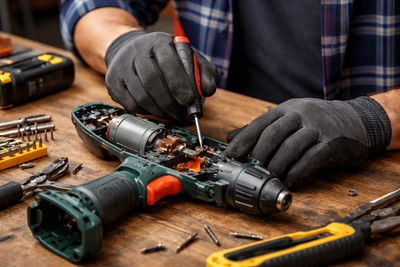
Repairing your own power tools can save money and reduce downtime, but it isn’t always the safest or smartest option. Some repairs are simple and suitable for DIY, while others require professional servicing due to electrical risk or mechanical complexity. Knowing the difference is key to protecting both yourself and your tools.
This guide explains what you can safely repair, what you should avoid, and how to decide whether DIY power tool repair is right for you.
Many common faults involve wear parts that are designed to be replaced. These repairs are generally low-risk if you follow safety steps and use correct replacement parts.
Basic DIY tool repairs most people can handle:
Replacing carbon brushes
Changing power cords or plugs
Replacing switches and triggers
Changing bearings
Replacing fans or housings
Cleaning dust buildup from motors
Replacing chuck assemblies
Swapping worn gears
These repairs require basic tools such as screwdrivers, pliers, and a multimeter. Most manufacturers provide exploded diagrams that make identifying parts easier.
Some power tool repairs involve high electrical risk or complex mechanical systems and should be left to professionals.
Avoid DIY repairs if the tool has:
Burnt or shorted motor windings
Damaged armatures or field coils
Battery pack faults (cordless tools)
Electronic control boards
Severe overheating damage
Internal wiring melted or fused
These faults can cause electric shock, fire risk, or complete tool failure if repaired incorrectly.
Before working on any power tool, always follow these rules:
Disconnect from mains or remove the battery
Wear insulated gloves and eye protection
Use the correct spare parts for your model
Take photos during disassembly
Keep screws and parts organised
Never test a tool while it is partially open
Replace damaged cables immediately
Never bypass safety switches
If you are unsure at any point, stop and seek professional help.
Basic repair work usually requires:
Screwdriver set
Multimeter
Pliers
Bearing puller
Cleaning brush
Electrical contact cleaner
Lubricant for gears and bearings
Having the right tools reduces the risk of damaging components.
Ask yourself these questions:
Is the repair cost more than 50% of a new tool?
Is the fault electrical or mechanical?
Are spare parts available?
Is the tool still under warranty?
Do I have the skills and tools needed?
If the answer to any of these is “no”, replacement or professional repair may be the better option.
In most cases, opening a power tool or fitting non-approved parts will void the manufacturer’s warranty. If your tool is still under warranty, contact an authorised service centre before attempting any repair.
Saves money
Reduces downtime
Extends tool lifespan
Helps the environment
Improves mechanical knowledge
Allows you to replace only the failed part
For tradespeople and regular DIY users, this can significantly reduce running costs.
You should use a professional repairer when:
The motor is damaged
The tool sparks excessively
There is a burning smell
The tool trips circuit breakers
The battery pack has failed
The fault is unclear
Professional repairs also provide safety testing and proper fault diagnosis.
Yes — many power tool repairs can be done safely at home, especially wear-part replacements like brushes, bearings, and switches. However, high-voltage and motor repairs should be left to professionals.
The key is knowing your limits. Simple repairs save money. Complex repairs protect your safety.
If you use quality power tool parts and follow proper procedures, DIY power tool repair can be both safe and cost-effective.
Here at Power Tool Spares, we stock power tool parts for all the top manufacturers. Here's a quick link list below:
If you don't see your brand listed above, we may still be able to help. Check our "Buy Parts" page for all of the power tool brands we deal with, or you can always contact us for any specific power tool spare parts requirements.
